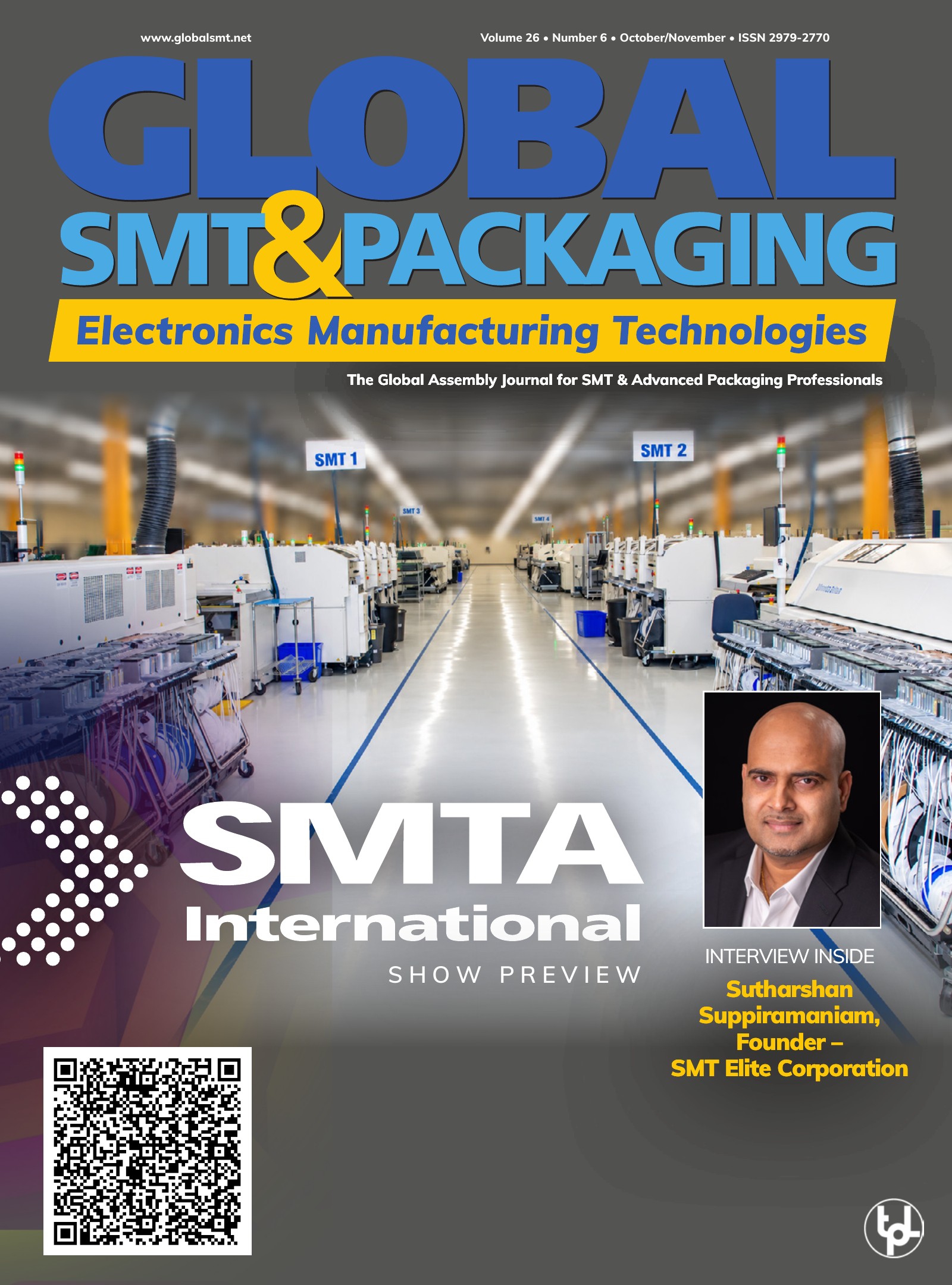
From SMT Engineering to Entrepreneur
Sutharshan started on the production floor as an SMT operator, to get his foot in the door. He progressed into SMT engineering and took on steadily greater technical responsibility at a high-volume manufacturer, where he oversaw fourteen SMT lines and was responsible for printing, placement, X-ray and reflow profiling, and for DFM feedback on layouts.
That environment was the opposite of a typical high-mix contract manufacturer. Extremely high volumes of the same products meant the repetition and process data needed to fine-tune manufacturing performance continuously. In his words:
“With that experience behind me, I’m now able to assess manufacturing problems much more quickly.”
When production moved offshore, he chose not to follow the industry into another large OEM.
“It’s a problem that needs to be approached in a scientific way, employing an engineering discipline. This led me to think, I can help more people out there than just one company.”
SMT Elite Corporation was the result.
An Engineering-Led Manufacturing Partner
SMT Elite is an engineering-led electronics manufacturing business. Much of its work arrives through referrals from suppliers and industry colleagues who know someone facing a difficult manufacturing problem.
The model is straightforward. SMT Elite first reviews the customer’s product, requirements and manufacturing risks. Depending on the program, it supports DFM, stencil and process development, thermal profiling, inspection, troubleshooting and rework, and coordinates PCB assembly through qualified Canadian contract manufacturing partners. That brings the right manufacturing resources to each project while SMT Elite stays closely involved in the engineering, process and quality of every program.
Solving Problems at the Root
Nearly two decades of process knowledge, design-of-experiments work and troubleshooting means that problems a less experienced team might take weeks to diagnose are often familiar on sight.
“The sample size for me for all these years has been enormous, and at high-volume facilities small mistakes become large problems very quickly.”
The discipline is to fix the cause, not the instance. When a problem traces back to layout, SMT Elite says so, and asks to be involved before the next revision:
“If you solve this, we’re not solving it for this one instance, we’re solving this problem forever for this product.”
One case from the interview illustrates the method. Solder would not wet to an ENIG surface on a single product while every other product reflowed normally. Working systematically through each process variable ruled out the manufacturing process and pointed to surface contamination. With a specialized laboratory at the University of Toronto, FTIR and TOF-SIMS analysis characterized the contamination and traced it to a process at the PCB supplier. The lesson: process knowledge narrows the problem; knowing when to bring in specialized analysis finishes it.
Evaluating Technology with Real Data
Sutharshan has evaluated printers, placement equipment, reflow ovens, AOI, SPI, BGA rework systems and X-ray equipment, including SPI benchmarking with Gauge R&R studies and Minitab analysis. His advice to manufacturers is direct:
“Don’t buy equipment based on a fancy PowerPoint, fancy video or a nice spec sheet. You must look at your product set. Ask for a demo.”
Bring the system in, run your own products through it, and judge it against your actual requirements. Statistics matter, but so do local technical support, ease of use, footprint and total cost of ownership, and the operators who will use the equipment every day should be part of the decision.
Responsiveness as a Working Principle
Time to market is the customer’s deadline, not SMT Elite’s.
“If an engineer is working against a deadline and needs help getting something through in a constrained timeframe, I tell them, don’t hesitate to call me. Sometimes a quick conversation can identify something that might otherwise take hours to resolve. To me, their urgency is my urgency.”
Supporting the Next Generation
Sutharshan serves on the SMTA Board of Directors, leads the SMTA Ontario Chapter, and chairs the SMTA Young Professionals initiative. Under his leadership the Ontario Chapter earned three Gold CLEAR Awards. He describes SMTA as an important part of his professional development since the day he joined, and one of his priorities is making sure the next generation sees the same value in it.
A consistent theme in his customer conversations is the difficulty of finding engineers with enough manufacturing exposure to develop deep process expertise. Transferring that knowledge, to customers’ teams and to the industry, is part of what SMT Elite exists to do.
Building the Future of SMT Elite
The long-term vision is to bring the manufacturing experience and engineering discipline developed over a career under SMT Elite’s own roof: a team of talented engineers and technicians, and eventually a highly capable manufacturing facility built around strong processes, measurable process capability and carefully selected technology. As Sutharshan puts it:
“The goal isn’t simply to own equipment or add capacity. It’s to build an engineering-led manufacturing organization that helps customers successfully bring complex, reliable products to market.”
